Why AI Connectors Are Thriving While Drone Connectors Struggle
Executive Summary: The connector market is bifurcating at an extreme rate. AI infrastructure demand for high-speed, high-power connectors is accelerating exponentially, while aircraft/drone connector adoption remains mired in regulatory purgatory. This isn’t irrational—it reflects fundamentally different commercialization timelines. AI infrastructure cleared every barrier; aircraft systems face 2-3 more years of validation. Smart capital acknowledges this divergence and positions accordingly.
Part 1: The Bifurcation Is Extreme
AI data center connectors are experiencing a supply shock of historic proportions. High-speed electrical connectors capable of handling 100+ Gbps signal integrity, operating in thermally demanding environments, and scaling to support thousands of interconnections per server rack are in acute shortage. Suppliers are adding capacity at the fastest pace in 20 years. Gross margins are expanding as demand outpaces supply.
Aircraft connectors, by contrast, are experiencing polite interest, not urgency. Suppliers report steady inquiry from aerospace integrators, but purchase orders remain in the hundreds of units, not thousands. Production volumes haven’t budged materially. Pricing is stable, not expanding.
🚀 AI Connectors
- Demand Growth: 60-80% YoY
- Lead Times: 12-18 months (constrained)
- Pricing Trend: ⬆️ Rising
- OEM Sentiment: Urgent/Aggressive
- Volume Trend: Exponential acceleration
- Margin Profile: Expanding
✈️ Aircraft/Drone Connectors
- Demand Growth: 10-15% YoY
- Lead Times: 4-8 weeks (normal)
- Pricing Trend: ➡️ Flat
- OEM Sentiment: Exploratory/Cautious
- Volume Trend: Linear to flat
- Margin Profile: Stable/Commoditizing
This isn’t a temporary imbalance. The gap is structural and reflects the stage of market development each industry is in.
Part 2: Why the Divergence Is Rational—A Timeline Analysis
The AI Connector Story: Demand Now, Supply Catching Up
AI data center operators faced no regulatory hurdles. The moment GPU capabilities and model economics justified capex deployment, they began building data centers at scale. A hyperscaler investing $10 billion in a data center cluster needs connectors this quarter, not in 2027. Suppliers are racing to add capacity and still can’t keep pace. This is a normal supply-constrained market in the early hypergrowth phase.
The Aircraft Connector Story: Policy First, Product Second, Revenue Last
Aircraft (whether cargo eVTOL, passenger drones, or autonomous logistic vehicles) face a completely different adoption curve:
- Policy Phase (2023-2026): Governments announce frameworks and initiatives. Investors get excited. Real aircraft orders remain negligible because operators are still in design phase, and airspace restrictions haven’t lifted at scale.
- Regulatory Phase (2027-2028): Aircraft designs move through type certification. Operators begin limited commercial operations under strict airspace pilots. First production aircraft roll off assembly lines in hundreds to thousands (not tens of thousands) annually.
- Commercial Scale (2028-2030): Airspace management infrastructure matures. Aircraft production ramps to 5,000-10,000 units annually. Connector demand becomes material.
The critical insight: Aircraft connector demand tracks aircraft certification and production, not policy announcements. Policy is necessary but not sufficient. Certification takes years. Production scale follows certification. Connector orders follow production.
Part 3: The Timeline That Matters
What’s happening: Vertiports under construction, airspace pilots operating in controlled pockets, integrators completing final designs for submission to aviation authorities.
Impact on connectors: Minimal. Small-scale sample orders for prototype validation. No material revenue contribution. Market sentiment driven entirely by policy releases, not actual orders.
Action: Watch, don’t chase. Fundamental catalysts are at least 12 months away.
What’s happening: Multiple cargo eVTOL variants achieve type certification. Guangdong and Yangtze River Delta commence scheduled low-altitude routes. First production airframes roll off assembly lines in meaningful numbers (50-200 units annually).
Impact on connectors: This is the inflection point. Power distribution harnesses for high-current battery systems. Flight control data buses supporting next-gen avionics. Environmental control systems (cooling for onboard electronics). For the first time, aircraft connector orders move from dozens to thousands of units quarterly. Suppliers see material production scheduling.
Action: Late 2027 marks entry window for investors seeking exposure. Comparable to AI connector market in early 2024.
What’s happening: National airspace management framework solidifies. Autonomous low-altitude routes proliferate across provincial networks. Aircraft production ramps to 500-1,500 units annually. Supply chain specialization deepens (dedicated molding lines, assembly capacity).
Impact on connectors: Peak growth period. Revenue CAGR of 40-80% for focused suppliers. This is when aircraft connectors become a genuine pillar of the electronics supply chain, comparable in strategic importance to automotive connectors in the 1990s.
Action: Primary accumulation window. Companies that capture design wins in 2027 will dominate market share in 2029.
What’s happening: Market becomes crowded with suppliers. Annual production stabilizes at 2,000-5,000 aircraft. Industry transitions from growth story to steady-state component.
Impact on connectors: Return to single-digit growth, normalized margins, entrance of low-cost competitors. Sector re-rates from speculative to defensive.
Part 4: The Hierarchy of Aircraft Connector Opportunities
Not all aircraft connectors will win equally. Industry structure creates a clear priority order based on technical necessity and margin potential:
| Connector Category | Applicazione | Timing | Revenue Priority |
|---|---|---|---|
| High-Current Power | Battery pack distribution, motor leads, charging interfaces | 2027 (First to volume) | ⭐⭐⭐⭐⭐ Highest |
| Flight-Critical Data | Flight control systems, sensor integration, avionics redundancy | 2027-2028 | ⭐⭐⭐⭐⭐ Highest |
| Precision Signal | Industrial inspection payloads, modular subsystems | 2028 | ⭐⭐⭐ Medium |
| RF/Antenna | Communication links, ground infrastructure | 2028-2029 | ⭐⭐⭐ Medium |
Why High-Current Connectors Win First
Battery-to-motor connectivity is non-negotiable and represents the highest value-add. Consider that cargo eVTOL systems operate at 400-800 volts with peak currents exceeding 200 amps. Standard commercial connectors won’t survive thermocycle testing. Suppliers capable of designing custom high-current solutions with integrated sealing and thermal management will capture outsized margins.
Integration Advantage in Flight-Critical Systems
Flight control buses demand the lowest latency and highest resilience. Suppliers mastering aviation-grade connector architectures gain stickiness with integrators who can’t afford redesign cycles post-certification. First-mover suppliers lock in multi-platform wins.
The Core Mistake Everyone Makes
🎯 Key Insight: The market systematically confuses policy momentum with product-market fit.
When China’s government announces a low-altitude economic initiative, investors extrapolate immediate adoption curves. But government policy is a necessary condition, not a sufficient one. Aircraft operators need certified aircraft, proven operational safety records, regulatory approvals, and economics that justify capital deployment. Those take time—2-3 years minimum.
AI data center operators, by contrast, faced zero regulatory barriers. The moment GPU performance and AI model economics justified capex, deployment was immediate. Policy (in the form of capital controls on GPU exports) actually reinforced demand for domestic server infrastructure.
These are fundamentally different commercialization timelines, and connector demand follows commercialization, not policy announcements.
FAQ: Common Questions on Aircraft vs. AI Connectors
The Bottom Line
The current market bifurcation isn’t temporary or mysterious. It reflects the genuine economic realities of two industries at different maturity stages. AI infrastructure has cleared every hurdle and faces only manufacturing capacity constraints. Aircraft systems have cleared only the technical hurdle and face 2-3 more years of regulatory, operational, and market validation.
That’s not a flaw in the aircraft story—it’s the nature of safety-critical systems. But it’s a fact that deserves respect in investment decisions.
For investors and suppliers: the patient capital that positions for 2027’s aircraft connector inflection will outperform speculators who chase 2025 policy releases. Focus on indicators that matter—aircraft certification milestones, operator procurement tenders, supply contracts—not press releases.
The low-altitude economy is real. The connector opportunity is real. But the timing is 2028-2029, not today. Wait for the inflection, then act decisively.
Need Technical Specifications for Your Connector Requirements?
Whether you’re developing AI infrastructure or low-altitude systems, understanding your connector ecosystem is critical.
Get a Consultation →Related Resources
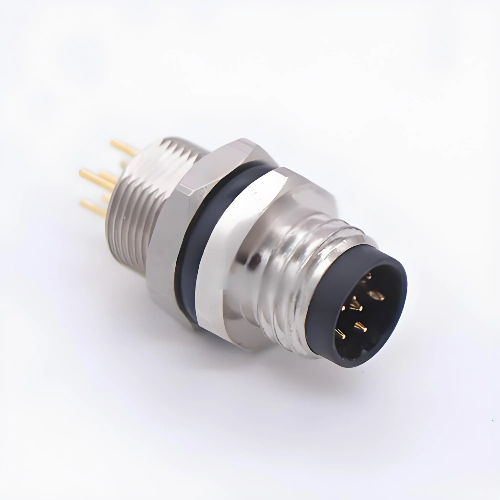
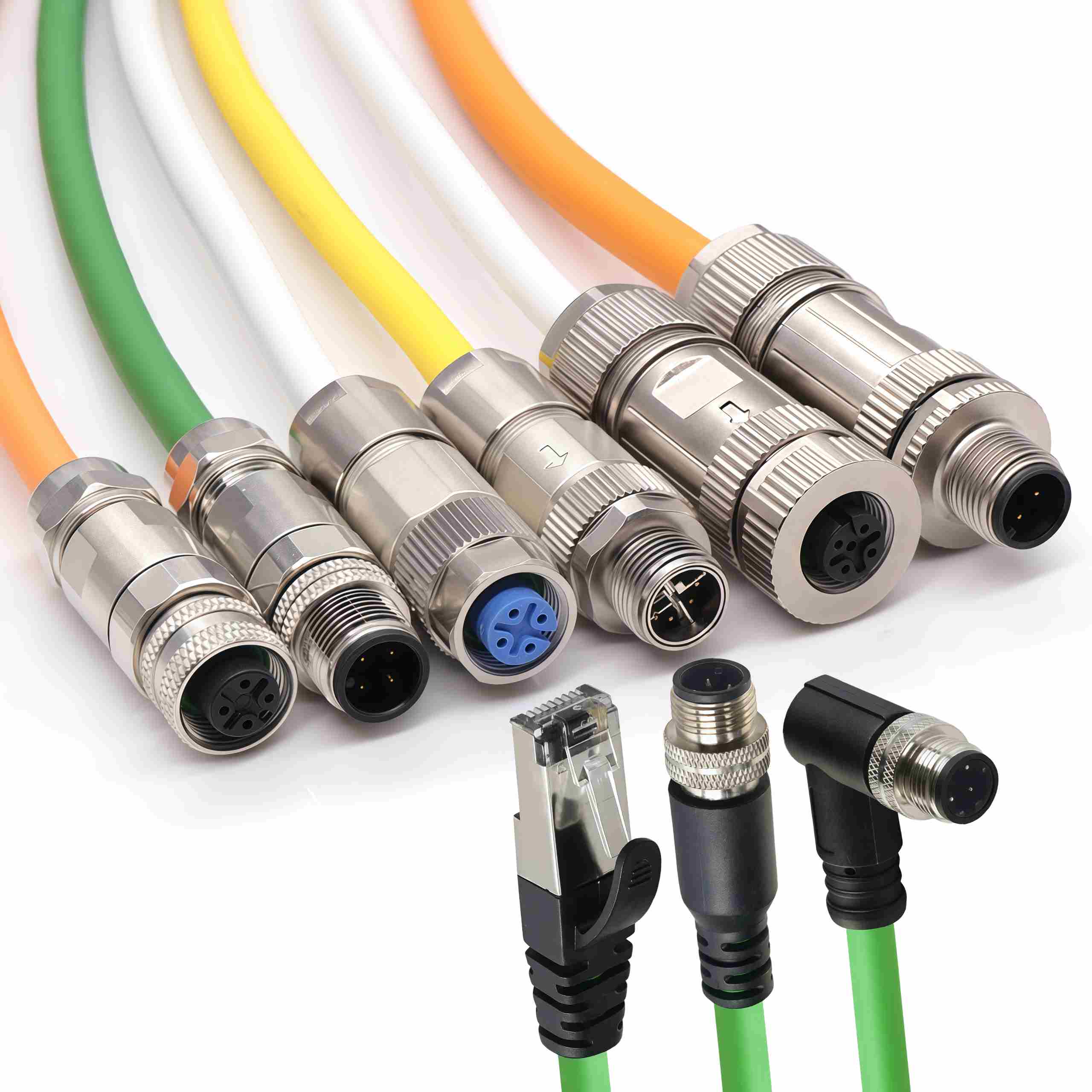
- ✔️ Explore M12 Connector Solutions for Aviation Applications
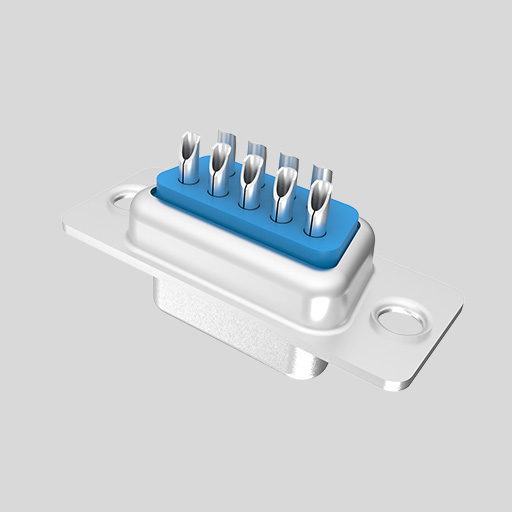
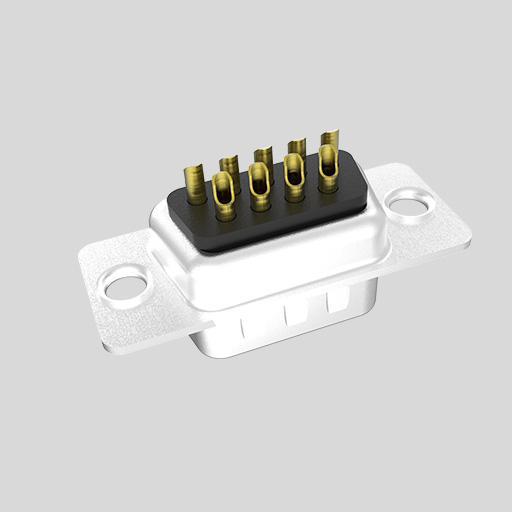
- ✔️ Legacy D-Sub Connector Portfolio
- ✔️ Subscribe to our industry analysis for quarterly market updates